Lady of Shalott and Pre-Raphaelitists
Lady of Shalott and Pre-Raphaelitists
The Pre-Raphaelite Brotherhood, a group of artists in the mid-19th century England sought to revive vivid detail, naturalism and rich storytelling of art before the High Renaissance. They rejected the academic rules of the Royal Academy that favoured the polished styles of Raphael and his followers. The paintings often depicted medieval legends, literary themes and romanticised beauty with emphasis on vibrant colours which were deeply inspired by nature and mythology.
A famous poem by Alfred, Lord Tennyson inspired multiple pre-Raphaelite artists and tells the story of a cursed woman trapped in a tower while only viewing the world through a mirror. Artists captivated by the theme, painted Lady's longing, and beauty.
Lady of Shalott
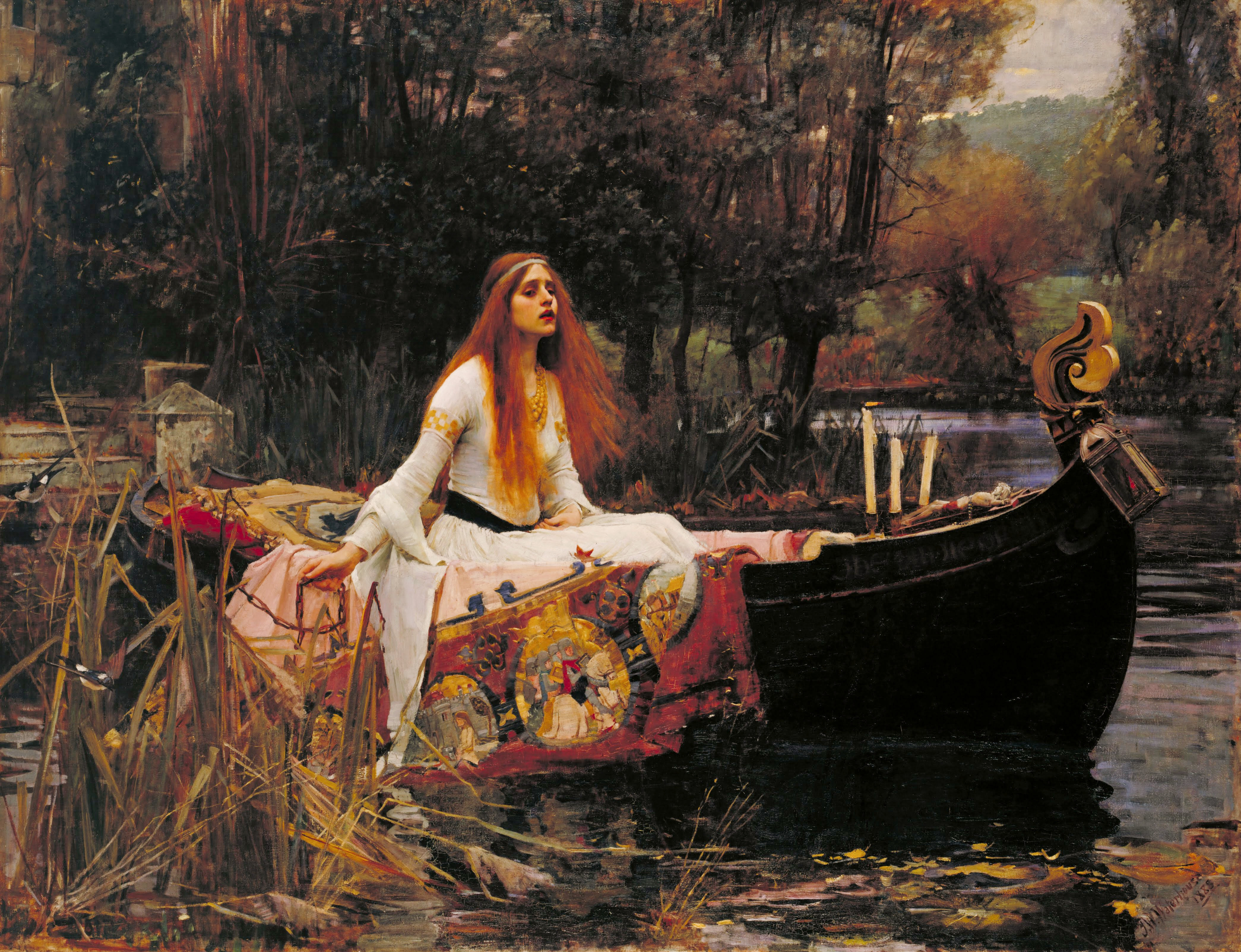 Waterhouse's version
Waterhouse's painting captures the moment just before the woman's death. Lady sits in a boat which is driftimg down the river towards Camelot. She has an ethereal expression. A single lantern can be seen burning beside her, autumn leaves create a mood of sorrow. We can see a mix of serenity and sorrow along with the boat- her passage towards destiny.
Waterhouse does not focus on the fear or struggle rather focuses on the tragic beauty and resignation.
 Holman Hunt's version
Holman Hunt's Lady is full of energy and emotion. She has wild hair, I can see shocked expression that she is carrying, hear arms stretched, mirror behind her shatters into pieces which is a significance of her broken destiny. Unlike Waterhouse's cool tones, Hunt has used reds and oranges which is a symbol for passion and chaos. This is the moment of rebellion and consequence.
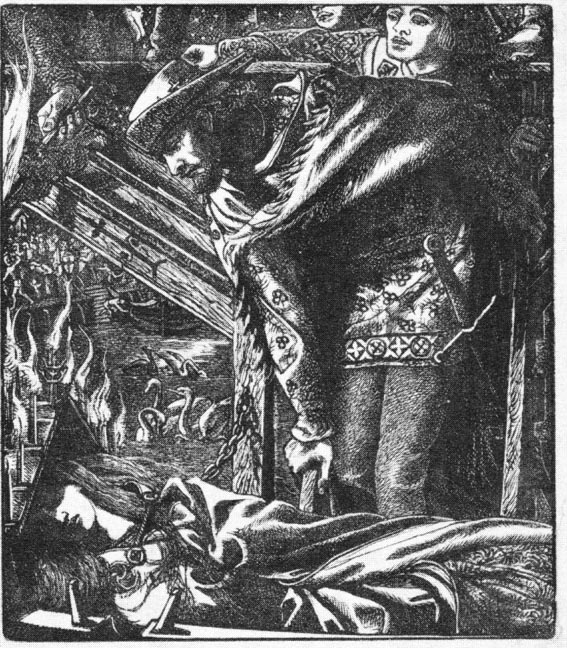 Rossetti's version
Rossetti's version is very different from both the pieces. He focuses on the Lady before she even looks at Lancelot. She is in the moment of deep longing surrounded by lush and details. Instead of being a damsel in distress, she is portrayed more of a romantic figure. There is romanticism over tragedy- less about doom, more about emotion and passion. She is known for her striking Pre-Raphaelite beauty, Jane Morris embodied Rossetti's ideal version of tragic love. Rossetti's version is all about the inner struggle rather than the external drama.
What if Morris painted the Lady?

This is an AI-generated image of a painting that Morris could have made.
I know Morris would have penned a letter to me "Abomination of AI, Death of Art" or rally against how machines are replacing artists themselves. I am truly in support with him. This is an AI generated image, made in seconds, no toil or emotions- just a dull AI image.
This is just to imagine and strike chords of what I am thinking Morris would have made, and in no sense is meant to support AI and replace artists :)


If Morris had painted the Lady of Shalott, would he have seen her escape from the tower as a symbol of freedom from industrialisation, or as a tragic reflection of the cost of abandoning craftsmanship and nature in pursuit of progress?
ReplyDeleteIf Morris had painted Lady of Shalott, he would view her escape not as liberation but more like a tragic break from craftsmanship- and that itself would be a symbol of abandoning beauty.
Delete